graham miller
- playing the man [19]
- graham miller [15]
- all that is solid melts into air [14]
- waiting for the miracle [10]
- darkness falls: melbourne art fair [08]
- suburban splendour [07]
- melbourne art fair [06]
- between a blink + recognition [05]
stockroom work
Waiting for the Miracle, 2010
"In Leonard Cohen’s song Waiting for the Miracle an aging man laments the time he has wasted waiting for the miraculous, transformative relationship that will finally make him feel connected, to feel loved. Alone, he lives with the vague regret that he was blinded to the possibilities available to him earlier in his life.
Although the miracle never comes for Cohen’s narrator, artists have commonly believed the miraculous to be omnipresent and part of the everyday fabric of the world. Diane Arbus said “if you scrutinize reality closely enough, if in some way you really, really get to it, it becomes fantastic1”. German art critic Franz Roh recognized what Arbus was talking about as early as 1925 describing a style in painting where commonplace subjects are carefully rendered with faithful realism so that the inherent magic of things becomes evident. He called it Magic Realism (long before it became known as a literary genre), believing it enabled the artist to emphasize “the mystery of human living amongst the reality of life.2”
This sensibility underscores the photography that I admire; work where insight is revealed through the atmospheric effects of luminous light; where there is “a sense of possibility, precariously but tenaciously held3” and that which responds to American photographer Robert Adams’ sentiment that we make art to keep intact “an affection for life4”.
Graham Miller 2010
1. Arbus, D. (1972). An Aperture Monograph, New York: Aperture
2. Bowers, M. A. (2004). Magic(al) Realism, London: Routledge, p.15
3. Adams, R. (1981). Beauty in Photography:Essays in the Defense of Traditional Values, New York: Aperture, p.34
4. Adams, R. (1981). Beauty in Photography:Essays in the Defense of Traditional Values, New York: Aperture, p. 14
Suburban Splendour 2007...
“It might be more useful, if not necessarily true, to think of photography as a narrow deep area between the novel and the film”
Lewis Baltz, photographer
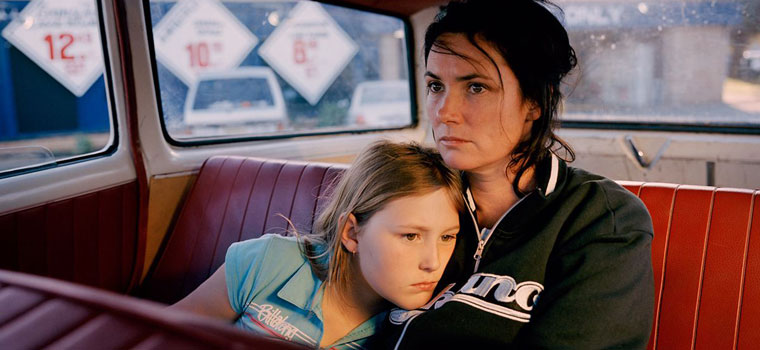
"The inspiration for Suburban Splendour came from numerous sources. Images materialised from encounters observed while driving, walking to the shops or visiting friends, from eavesdropping and casual conversation, but more often than not the photographs were inspired by literature and cinema. Films by Paul Thomas Anderson, Jim Jarmusch, and Ray Lawrence all contributed, as did writing by Richard Ford and the lyrics of Paul Kelly. But the background soundtrack which remained constant was the voice of the American short story writer Raymond Carver. Carver’s vision depicts ordinary blue collar people living lives of quiet desperation, people who are feeling their way in the dark with the hope that maybe next week things will get better. Reading his work, now nearly twenty years after his death, it seems to me that his writing taps into a sense of contemporary isolation that reflects the anomie, uncertainties and vulnerabilities of existing in a world changed after 9/11, and on a planet which contemplates an undecided environmental future.
Melancholy has always appeared to be just under the skin of the suburban vernacular. Australians are more affluent than ever, and politicians monotonously boast of economic prosperity, but we are no happier now than we were fifty years ago. Life seems a process of replacing one anxiety for another; one desire for another. The elusive dream of happiness is continuously postponed. What if happiness is not a final destination that we plan to arrive at and then stay, but a fragile and fleeting emotion, an intermittent state that evaporates leaving us with a lingering backdrop of what Julia Kristeva calls “a sad voluptuousness, a despondent intoxication”?
We all experience within us what the Portuguese call saudade, or the German sehnsucht, a vague but inconsolable longing, an unnamed enigmatic yearning. Nick Cave in ‘The Secret Life of the Love Song’, describes saudade as an inexplicable sadness which lies at the heart of certain works of art, and a quality which is an essential part of what it is to be human. “The writer who refuses to explore the darker regions of the heart,” he says “will never be able to write convincingly about wonder, the magic and the joy of love…so within the fabric of the Love Song, within its melody, its lyric, one must sense an acknowledgement of suffering.”
The compressed cinematic frames of Suburban Splendour try to articulate something of the soft lament that Cave and Carver allude to. These characters are troubled, but not irretrievably lost; they carry a dignified endurance and a sense of bruised optimism. These people are survivors. They have a desire, as we all do, to be transported from darkness into light"
Graham Miller 2007
- TURNER GALLERIES | showcasing contemporary art
at 470 WILLIAM STREET NORTHBRIDGE WESTERN AUSTRALIA 6003 - TURNER GALLERIES HAS NOW CLOSED.
This website is an archived record of the exhibitions and artwork shown at the gallery. - Turner Galleries acknowledges the Whadjuk Nyoongar people as the Traditional Owners of the lands and waters where Turner Galleries is situated, and pay our respect to Elders past, present and emerging.
- Website © 2000-2024 TURNER GALLERIES. All images are © the artists and are not to be used without permission.
- This is a millapede project.